Denim began as the toughest cloth a laborer could buy, and it ended up as a global fashion language spoken by everyone from suburban teenagers to runway designers. The story of that transformation is not really about fabric. It is about a succession of groups—miners, movie rebels, hippies, hip-hop artists, and luxury designers—who each borrowed the same sturdy cotton twill and used it to say something new. Trace those borrowings in order, and you can see how a utilitarian garment became one of the most culturally loaded pieces of clothing in the modern wardrobe. This article follows that sequence, focusing on denim's cultural history in the United States while acknowledging its worldwide reach.
Denim's Humble Beginnings: Workwear of the 19th Century
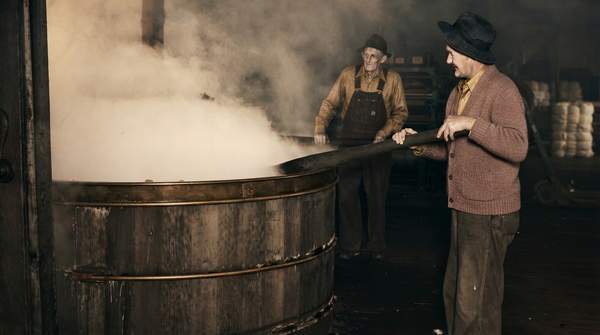
At the end of the nineteenth century, denim had no symbolic ambitions whatsoever. As fashion historian Emma McClendon explains in the PBS documentary Riveted: The History of Jeans, roughly 70 percent of American workers at the time toiled on farms, in factories, mines, or construction. That economy of physical labor created enormous demand for durable, inexpensive clothing, and denim answered it. The garments themselves were not even called jeans; they were known as waist overalls.
The decisive technical step was reinforcement. Author James Sullivan notes in the same documentary that once copper rivets were added to the stress points of the trousers, the product became, in his words, "the most durable form of workwear available to any working American." Levi Strauss & Co. patented those metal rivets, as Hawthorn's historical account by Tom Lovelace recounts, and began producing the iconic blue denim trousers that became a common feature among working men. In the early twentieth century, denim spread further as the preferred workwear of cowboys, miners, and farmers in the American West—cheap, sturdy, and practical, chosen over the lighter "jean" fabrics made from cotton, linen, and wool.
Even at this stage, there were hints that denim could leave the job site. The Museum at FIT holds a striped denim walking suit from around 1915 whose fashionable silhouette reflects a wartime trend toward utilitarian fabrics in ordinary dress. Fashion historian Birgit Haase describes the era's watchwords as "simplicity and functionality." Denim was still practical clothing, but it had already begun appearing in contexts beyond pure labor.