The women's power suit did not arrive fully formed. It evolved through distinct eras, each shaped by women's changing place in work and public life. The story begins with Coco Chanel borrowing comfort from menswear in the 1920s, moves through the deliberately masculine "power dressing" of the late 1970s and 1980s, softens in the 1990s as women's workplace confidence grew, and diversifies today into a garment of individual choice. Understanding these four stages reveals how a piece of clothing became a running commentary on gender, authority, and identity.
The Genesis of the Women's Suit: Early Adaptations (1920s-1930s)
The first era was about practicality and quiet defiance. In the 1920s, women were entering the workforce in greater numbers, driven by economic necessity and the changes that followed World War I, and their clothing had to keep up. Fashion historian accounts describe how the women's suit was deliberately designed for these changing lifestyles.
Coco Chanel was the pivotal figure. As fashion educator Francesca Sterlacci recounts, Chanel found inspiration in her boyfriend's closet, recognizing that men's clothing was more comfortable and seeking to liberate women from the restrictive clothing of the era. Her famous ensemble, dated around 1925, paired a collarless wool jacket with a skirt, merging masculine comfort with a feminine aesthetic. Her tweed styles remain recognizable nearly a century later.
The Chanel suit became, in the words of one academic analysis of the garment's history, the prototype of the power suit. Hollywood also played a role: designer Adrian created a power suit for actress Joan Crawford in the 1930s. And the boundary kept shifting in small ways—in 1933, Eleanor Roosevelt became the first First Lady to wear trousers at an official White House event.
The Rise of 'Wardrobe Engineering': 1970s-1980s Power Dressing
The second era turned the suit into a strategy. In his 1977 book The Woman's Dress for Success Book, John T. Molloy opened bluntly: "Most American women dress for failure." His guide outlined what he called wardrobe engineering—a prescriptive way to dress to climb the corporate ladder and be taken seriously by men. He called it power clothing, and women largely followed the prescription.
The resulting look was structured and masculine: broad shoulders, tailored jackets, and trousers designed to assert authority. Power dressing, as the style came to be known, was popular among working women in the late 1970s and 1980s as a means of establishing authority in professional and political environments traditionally dominated by men. Margaret Thatcher's tailored ensembles became the era's most visible example.
The reasoning behind the borrowed masculinity was explicit in feminist fashion scholarship of the period: in Western society, masculinity was intrinsically linked to respect, strength, and authority, while femininity was linked to sexuality and motherhood. Women, the analysis goes, wanted a masculine garment in order to be viewed as capable businesswomen. The suit was less a fashion choice than a tool for assimilation into spaces built around men's norms.
The Softer Silhouette: The 1990s Shift
By the 1990s, the rigid formula was loosening. Writing on the history of the power suit, JSTOR Daily's Ashawnta Jackson notes that by the decade's middle years, researchers observed a shift back toward more creative and fashion-oriented dress for women's business images. That shift, in the researchers' own words, "was due not only to women asserting themselves, but also valuing themselves and their culture for what it is."
Even Molloy revised some of his own opinions in a later edition of his book. The era of prescriptive power dressing was in decline. Employers, meanwhile, had begun deeming pantsuits and even miniskirts acceptable office attire, widening the range of what professionalism could look like.
Designers such as Calvin Klein and Ralph Lauren offered suits that were sophisticated and versatile, suitable for a variety of professional settings rather than a single corporate uniform. The interpretation offered by fashion historians is that this softening reflected growing confidence: women no longer needed to mirror men exactly to be seen as legitimate.
The Modern Suit: Versatility and Individual Expression in the 21st Century
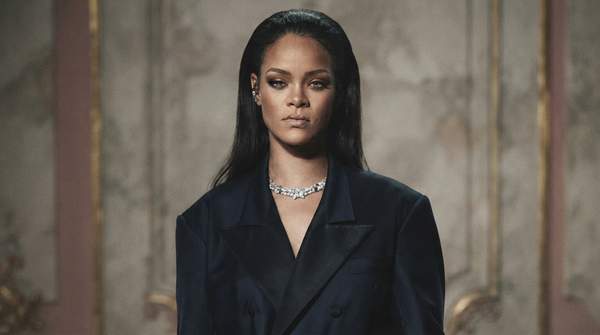
In the 21st century, the power suit remains a symbol of empowerment, but its interpretation has diversified. Modern suits come in a wide range of styles, cuts, and colors, reflecting the individuality and personal style of the wearer. Designers continue to innovate with bold patterns, luxurious fabrics, and unconventional silhouettes, and the rise of women in leadership positions across industries has kept the garment relevant.
What changed most is the logic of wearing one. Earlier eras treated the suit as a requirement or a tactic; today it is increasingly described as a choice. One contemporary commentary puts it in terms of a woman embracing female power "through the clothing that she CHOOSES to wear"—a small word carrying the whole shift from prescription to self-expression.
It is worth noting the limits of this narrative. The account above is drawn primarily from Western fashion history, and one scholarly analysis cautions against a purely West-centric reading, observing that women in other contexts—for instance, Chinese women, who now often favor different casual styles at work—experienced their own distinct trajectories within patriarchal societies.
The Power Suit's Evolution: A Chronological Timeline
Use this timeline to trace how design, social context, and key figures moved together across each era. Reading down the columns shows the direct relationship between women's changing societal roles and what they wore.
| Era | Key Design Features | Social/Cultural Context | Influential Figures/Concepts |
|---|---|---|---|
| Early Adaptation (1920s-1930s) | Tailored jacket-and-skirt suits adapted from menswear; collarless wool jacket, tweed, comfortable serviceable fabrics | Women entered the workforce in growing numbers after World War I, challenging traditional gender roles | Coco Chanel's circa-1925 suit as prototype; Adrian's 1930s suit for Joan Crawford; Eleanor Roosevelt in trousers, 1933 |
| 'Wardrobe Engineering' (1970s-1980s) | Structured, masculine silhouettes with broad shoulders; tailored jackets and trousers | Women entered professional roles and used dress to gain credibility in male-dominated spaces; masculinity coded as authority | John T. Molloy's Dress for Success and "wardrobe engineering"; Margaret Thatcher as the era's visible exemplar |
| The Softer 90s | More relaxed, creative and fashion-oriented business dress; versatile suits from Calvin Klein and Ralph Lauren | Women asserting and valuing themselves; employers accepted pantsuits and wider office attire; Molloy revised his prescriptions | Researchers documenting the decline of power dressing; the shift from assimilation to self-definition |
| The Modern Suit (21st Century) | Wide range of styles, cuts, colors; bold patterns, luxurious fabrics, unconventional silhouettes | Women in leadership across industries; suit as individual choice rather than uniform | Contemporary designers' diverse interpretations; the concept of chosen, rather than mandated, power dressing |
The pattern across the table is consistent: each design change tracks a change in women's circumstances. When women first needed to work, the suit borrowed men's practicality. When they needed to be taken seriously in corporations, it borrowed men's authority. When that credibility was established, it softened. And when women's professional presence became unremarkable, it diversified into personal expression.
From Assimilation to Authority: The Evolving Symbolism of the Power Suit
Strip away the shoulder pads and the tweed, and the power suit's deeper story is about what "power" itself meant in each era. In the beginning, wearing a suit was a small act of equality and liberation—comfort and mobility as statements of independence. In the 1970s and 1980s, the suit's masculine coding was the point: it functioned as a non-verbal cue of reliability and trustworthiness, a way to "look the part" in rooms where women were outsiders.
By the 1990s, the symbolism inverted. Women began balancing masculine and feminine elements rather than suppressing the feminine entirely—an evolving strategy, as one fashion-history analysis frames it, that moved from embodying masculinity to integrating both gender temperaments. Today the suit no longer signals that a woman belongs in a man's world; it signals that she defines the terms of her own presence. As one fashion commentary observes, the garment is now about owning your space and challenging the status quo rather than fitting into someone else's template.
Embracing the Modern Power Suit: A Statement of Choice
Readers can confidently choose a power suit style that aligns with their individual professional identity and personal expression, recognizing its rich history as a symbol of female empowerment. The suit that began as borrowed menswear is now a garment with no single required silhouette, color, or formula.
The measurable indicator of this evolution is the continued diversification of suit styles in fashion trends and professional wardrobes, reflecting individual choice rather than a prescriptive uniform. Watch for that variety—on runways, in offices, and in the range of cuts and colors now considered professionally authoritative—as the ongoing proof that the power suit's transformation from tool of assimilation to statement of self-defined authority is holding.
Sources
- The History of the Female Power Suit — History is Now Magazine, Podcasts, Blog and Books | Modern International and American history
- Power dressing - Wikipedia — EN
- THE POWER SUIT - THEN & NOW - University of Fashion Blog
- The History of Women's Suits and the Trendsetters That Paved the Way — Suitshop
- The History of the Power Suit for Women - JSTOR Daily
- Atlantis PRESS
- The Power suit - a history. What wearing a suit does for women. — DALYANYC
- Female Power Suit — History is Now — History is Now Magazine, Podcasts, Blog and Books | Modern International and American history