AI-powered beauty personalization works in three broad stages: it collects information about you, analyzes that information with machine learning models, and converts the results into specific product suggestions. The inputs range from quiz answers and selfies to purchase history and local weather data; the outputs are tailored moisturizers, foundation shades, and full skincare routines. Understanding this pipeline—and its privacy and bias risks—helps you judge what these tools can and cannot do.
Stage 1: Data Collection – Fueling the AI with Your Information
Every AI beauty system begins with a profile, and that profile is built from several distinct streams of information. The most visible stream is explicit data: questionnaires about skin type, sensitivities, allergies, and stated concerns. Industry descriptions of platforms such as Haut.AI note that these tools combine selfies, skin questionnaires, and even environmental data like local pollution and weather to build the basis for a skincare regimen.
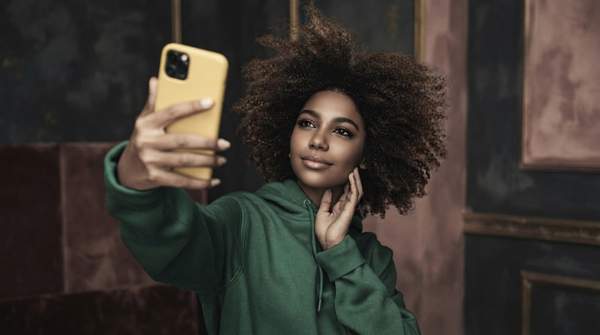
The second stream is visual. Facial scans and user-uploaded images allow the system to assess measurable skin conditions—pore size, hydration, dryness, oiliness, and red spots—rather than relying solely on what a user says about themselves. The third stream is behavioral and contextual: purchase history, engagement patterns, demographic information, and even social media sentiment. Writing on AI-augmented beauty describes how algorithms analyze these vast datasets to identify patterns and correlations, and can factor in lifestyle choices, environmental factors, and dietary habits to create a more holistic recommendation.
Stage 2: AI Analysis – Understanding Your Unique Beauty Needs
Once collected, the data is processed by different machine learning models, each suited to a particular input type. Images are handled by convolutional neural networks (CNNs) and related deep learning architectures. A study published in the American Journal of Health, Medicine and Nursing Practice reports that its recommendation system employed image recognition models including a CNN at 92% accuracy, VGGNet at 94%, and DenseNet at 98% to analyze user-uploaded skin images and identify dermatological concerns such as dryness, oiliness, and red spots.
Other research takes different technical routes. An IEEE-published project described on its code repository uses YOLOv4, an object recognition algorithm, to detect key features in face images and extract regions of interest for further multi-label analysis. A separate hybrid system, also published in IEEE, combines K-nearest neighbors (KNN), CNNs, transfer learning with EfficientNet B0, and content-based filtering, using inputs like skin tone, skin type, and acne severity to guide product selection. A 2024 conference paper by Vinutha and Dayananda presents a content-based filtering approach that examines the chemical makeup of products alongside individual skin types.
The common thread is pattern recognition: these models classify skin characteristics and match them against product attributes, moving beyond subjective self-assessment toward more precise, data-driven judgments. Industry reporting notes that machine learning algorithms can now accurately assess skin tone, type, and conditions—capability that underpins the current wave of AI beauty analyzers.
Stage 3: Recommendation Output – Tailored Skincare and Makeup Solutions
The final stage translates analysis into concrete suggestions. Based on the comprehensive profile, the system delivers tailored product recommendations and customized regimens—sometimes spanning skincare, makeup, and haircare categories, as the journal study describes. The goal is precise, context-aware product matching: a recommended moisturizer for dryness detected in a selfie, or a foundation shade matched to an assessed skin tone.
Output is not always a single product. Research on AI in customized skincare describes systems that continuously track changes in skin conditions by analyzing user-submitted photographs, providing real-time feedback and adaptive recommendations—for example, an app assessing daily hydration levels and alerting a user when their skin shows excessive dryness. Research cited in that review demonstrated the accuracy of machine learning models, including random forest algorithms, in detecting hydration levels. Users of such platforms have reported improved skincare results and greater satisfaction with products designed for their specific needs, though these are self-reported outcomes rather than clinical findings.
The AI Beauty Personalization Pipeline
The following model traces how a single user's data moves through the three stages, from raw input to finished recommendation. Follow any row left to right to see how one piece of information becomes one product suggestion.
| Stage | Data Input | AI Method | Resulting Output |
|---|---|---|---|
| 1. Collection | Selfie or facial scan | Image recognition (CNN, VGGNet, DenseNet, YOLOv4) | Detected concerns: dryness, oiliness, red spots, pore size |
| 1. Collection | Quiz answers on skin type, sensitivities, diet, stress | Profile construction | Foundational personalized profile |
| 1. Collection | Purchase history, demographics, local weather and pollution | Pattern and correlation analysis | Context for preference and behavior |
| 2. Analysis | Combined profile and image data | Hybrid models (KNN, CNN, content-based filtering) | Classified skin type, tone, and severity of concerns |
| 3. Output | Full analysis | Product matching against attributes and ingredients | Tailored moisturizer, foundation shade, or full routine |
| 3. Output | Ongoing photo submissions | Continuous tracking (e.g., hydration detection) | Adaptive recommendations and alerts |
Read as a sequence, the pipeline shows why each data type matters: the selfie supplies objective measurements, the quiz supplies context the camera cannot capture, and behavioral data refines what the system already knows about your preferences. Remove any stream and the recommendation becomes correspondingly less precise.
Key Data Categories: What AI Learns About You
It is worth pausing on how much these systems can infer. Explicit data—your answers—reveals what you believe about your skin. Visual data reveals what your skin actually looks like at a moment in time, including conditions you may not have noticed. Behavioral data, such as purchase history and engagement patterns, reveals what you actually buy and use, which can differ from what you say you want. Demographic and environmental data—age, location, weather, pollution—adds context that industry sources say allows AI to weigh factors beyond skin type alone.
Industry commentary on AI personalization notes that algorithms gather user preferences, behavior patterns, and demographic information as the foundation for recommendations. The breadth is the point: a holistic profile is what enables a recommendation that fits you rather than an average customer. It is also what raises the stakes for how that data is handled.
Navigating the Risks: Data Privacy and Algorithmic Bias
The same richness of data that powers personalization creates two significant risks. The first is privacy. Many AI skincare tools rely on facial scans, quizzes, or user-uploaded selfies—biometric-adjacent data that is intensely personal. Commentators on AI in beauty argue that companies need to be transparent about data collection practices, obtain explicit user consent, and implement robust security measures, and that consumers should have the right to access, modify, and delete their data. Compliance with data protection laws such as the GDPR is described as crucial, though the global regulatory landscape for AI in beauty remains fragmented, with no unified standards across countries.
The second risk is algorithmic bias. The quality of an AI's recommendations depends on the data it was trained on. If that training data is biased, the resulting recommendations may be biased toward certain skin types, ethnicities, or genders—leading to unfair representation and a lack of inclusivity. Proposed mitigations include training on diverse datasets, employing human oversight, and continuously monitoring outputs for fairness. For consumers, this means a recommendation that works well for one person may be systematically less accurate for another.
Making Informed Choices in AI-Powered Beauty
Consumers should actively understand the data they share with AI beauty platforms and be aware of the potential for algorithmic bias to make informed decisions about personalized product recommendations. Practically, that means checking what a tool collects before uploading a selfie, looking for a clear privacy policy that explains how skin data is stored and whether you can delete it, and treating AI suggestions as informed starting points rather than dermatological diagnoses.
The measurable indicator to watch is increased transparency from beauty brands regarding data usage policies and AI algorithm training data diversity. Brands that disclose what data they collect, how it is protected, and how representative their training datasets are give you the evidence needed to judge both the privacy risk and the likelihood that the recommendation actually fits your skin.
Sources
- The future of personalized skincare: where beauty meets AI — UpCircle
- The AI-Augmented You: Redefining Beauty with Technology — Data Pilot
- Ieeexplore
- AI Beauty: How Artificial Intelligence Is Transforming Beauty Sales — Blanka Beauty
- Artificial Intelligence in the Evolution of Customized Skincare Regimens - PMC
- How AI in the Beauty Industry is Bringing Product Personalization — Phoenix Chemical, Inc.