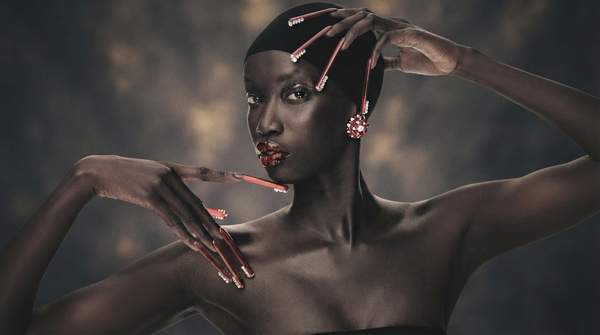
Want the nails you saw on the runway or a red carpet? Three techniques dominate the conversation right now: Structured Auras, Liquid Metal and 3D Chrome, and Extreme Shapes. They differ sharply in skill required, durability, and how practical they are for daily life. Here is what each one is, and what to weigh before you ask for it.
Introduction to Innovative Nail Art
Nail art has moved well beyond decoration. As Shore Beauty School's training guide puts it, nail art is "a form of self-expression," and advanced techniques let artists deliver customized designs rather than one-size-fits-all polish. But advanced means demanding. Some of these looks are built for weeks of wear. Others belong on a photoshoot set, not a keyboard.
So before you screenshot a look, ask two questions. How complex is it to apply? And how will it survive your actual routine?
Structured Auras: The Hazy Glow
An aura nail is a soft, hazy halo of color, often a gradient radiating from the center of the nail. Salons frequently create it by airbrushing a fine mist of color onto a cured base, though sponges and brushes work too. The "structured" part refers to what sits underneath: a structured gel base rather than thin regular gel polish.
Application takes real control. Manucurist's guide, written by Manon Bonnaillie, warns against overloading the sponge with color—several light passes build the halo gradually and keep the blend soft. On short nails, Elegelli's guide suggests keeping the halo small and low-contrast, and notes a brush can be easier to control than a sponge over a small area.
The durability comes from the base, not the design. Structured gel lasts roughly three to four weeks and protects against bending and breaking, while regular gel polish typically chips within one to two weeks, according to Function of Vex's structured gel explainer.
Liquid Metal & 3D Chrome: Reflective Artistry
This is the mirror-finish look. A special powder applied over gel polish creates a reflective surface that looks like liquid metal—molten lines, abstract swirls, or 3D French accents. Nail supplier Mia Secret describes it as an effect that looks "poured onto the nail," sometimes combining nude builder gel bases with metallic sculpted art on top for an editorial contrast.
The catch? The finish is unforgiving. Because the surface is so reflective, any unevenness becomes obvious, so refinement matters more than with flatter designs. Precision from your technician is not optional.
The reward is durability plus drama. The Little Nail Shop, a Fresno salon, calls chrome the top salon choice, noting the metallic shine creates an extravagant effect. One caveat: that durability is documented for chrome finishes generally—specific wear for sculpted 3D elements isn't separately quantified.
Extreme Nail Shapes: Pushing Boundaries
Extreme shapes are sculpted, boundary-pushing lengths and silhouettes—most often seen in fashion shows, editorial features, competitions, and photoshoots, as Scratch magazine's industry coverage explains. The process is meticulous: cleanse and shape the natural nail, apply a form to extend it, then sculpt with a strong medium in thin, even layers, reinforcing stress areas like the free edge and sidewalls.
They are also fragile by nature. Scratch's reporting notes the length and structure of extreme shapes make them more prone to breaking if not built correctly, and consistency across all ten nails is one of the most common challenges. For award-winning artist Danielle Brindley, extreme nails are "a cornerstone of my career"—but that career happens on stages and sets, not in everyday wear.
Innovative Nail Art Techniques: A Comparative Guide
Use this table to weigh the three techniques side by side before your appointment. It compares what each style is, how demanding it is to apply, and what practical trade-offs come with wearing it.
| Technique | What It Is | Application Complexity | Practical Considerations |
|---|---|---|---|
| Structured Auras | A soft, hazy halo of color, airbrushed, sponged, or brushed onto a structured gel base. | Moderate—requires control and light layering to blend the halo without overloading color; brushes may be easier on short nails. | The structured gel base lasts about 3–4 weeks and resists breakage; short or rounded nails suit a small, low-contrast halo. |
| Liquid Metal / 3D Chrome | A mirror-like metallic finish from special powder over gel polish; can include sculpted 3D swirls or French accents. | High—reflective surfaces magnify any unevenness, so flawless refinement is critical. | Chrome finishes are known for durability and are a top salon choice; specific wear for 3D elements isn't separately documented. |
| Extreme Shapes | Sculpted, boundary-pushing lengths and silhouettes showcased in competitions, fashion shows, and photoshoots. | Very high—artists should master basic structure first; thin, even layers and reinforced stress areas are essential. | Prone to breaking if not built correctly; best suited to events and shoots rather than extended everyday wear. |
The pattern is clear: as visual drama increases, so does the skill required—and, in the case of extreme shapes, everyday practicality drops away entirely.
Choosing Your Advanced Nail Art Style: Practical Considerations
Start with your lifestyle. The Little Nail Shop's client advice is blunt: minimal designs work best for daily wear, while bold nail art suits events and vacations. If your hands live in gloves, keyboards, or gym equipment, an extreme shape is fighting your routine from day one.
Next, consider length and shape. Some styles, like chrome and abstract art, look best on longer nails, the salon notes—though auras can be adapted to short nails with the right adjustments. Then think maintenance: structured gel's three-to-four-week lifespan means fewer salon visits than chipping regular polish.
Finally, find the right technician. These are not DIY techniques. Airbrushed auras need a compressor and practice; chrome punishes sloppy application; extreme shapes demand mastered fundamentals. Bring inspiration photos, and trust an experienced artist to adapt a trend to your nail shape and skin tone.
Making an Informed Choice for Your Next Nail Art
Before committing to an advanced nail art style, assess how it fits your lifestyle and maintenance commitment, and be prepared to discuss these factors with a skilled nail technician. That conversation is where the trend becomes wearable: a structured aura adapted to your short round nails, or a chrome set your artist knows how to finish flawlessly.
Your measurable indicator of success? A successful consultation with a nail technician where your chosen innovative style is clearly understood and its practical implications are mutually acknowledged. Walk in knowing what the technique involves, what it demands, and how long it should last—and you'll leave with the look you actually wanted.
Sources
- Exploring Nail Art Techniques - Shore Beauty School
- Aura Nails: Our Most Beautiful Styles and How to Achieve Them — Manucurist US
- Aura Nails: How to Do Them at Home, Plus 10 Aura Nail Designs — Elegelli
- What Is a Structured Gel Manicure? Benefits & How It Works — Function of Vex
- Mia Secret Store
- 10 Trendy Nail Art Ideas to Try for Your Next Salon Visit - The Little Nail Shop
- Into the extreme — Digital