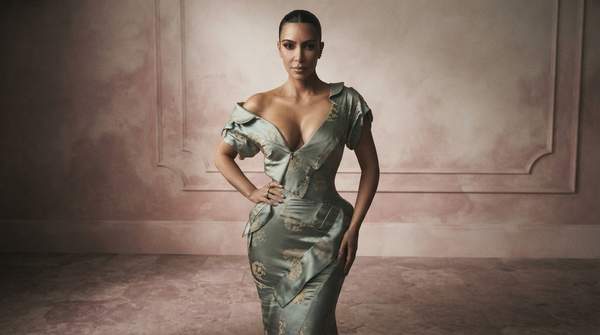
The most instructive vintage red carpet moment of late came from Kim Kardashian, who wore archival Dior by John Galliano from the Spring 2000 collection to the October 21 premiere of All's Fair, celebrating her 45th birthday in the process. As Marie Claire reported, embroidered diagonal panels and a plunging neckline "added edge to the otherwise classic mermaid silhouette." That one sentence describes the whole mechanism of a successful reinterpretation: identify the defining characteristics of a classic form, then modify specific elements so the dress reads as current rather than archival.
Case Study: Kim Kardashian and the Modern Mermaid
To understand what Kardashian's look updated, start with what a mermaid silhouette is, as the evidence describes it. The classic mermaid is characterized by a fitted bodice that follows the body's contours through the hips before flaring out dramatically at or below the knee, creating a sculpted, hourglass line. Marie Claire's commentary frames the Galliano gown as "otherwise classic" — meaning the foundational shape and its figure-tracing proportions remained intact. The dress's innovation was not in its architecture but in its surface and neckline.
The first modernizing element is texture. Embroidered diagonal panels introduce a directional, angular visual rhythm across the body. Where a classic mermaid gown tends to read as one smooth, continuous curve, the panels break the surface into graphic sections. The embroidery adds dimensionality that a plain matte or satin finish would not, and the diagonal orientation pulls the eye across the figure rather than straight down it — a subtle but distinctly contemporary effect.
The second element is the plunging neckline. Classic mermaid gowns of the mid-century mold typically keep the upper body relatively covered and structured, letting the drama build toward the flared hem. A deep neckline reverses that emphasis, shifting the focal point upward and adding what the commentary explicitly calls "edge." The result is a gown whose structure honors the classic silhouette while its details belong unmistakably to a later design vocabulary.
Worth noting: the specific modernizing elements here are limited to those explicitly mentioned in the published commentary. No designer intent is being inferred, and this analysis is drawn from fashion reporting rather than original critique. What can be said with confidence is that two precise modifications — texture treatment and neckline — were sufficient to shift the gown's register from period piece to current statement.
How Classic Silhouettes Get a Modern Red Carpet Update
The table below isolates the defining characteristics of the classic form and contrasts them with the specific design modifications in Kardashian's version, alongside the broader styling principles that apply to any vintage reinterpretation.
| Celebrity / Event | Classic Silhouette | Defining Classic Elements | Modern Reinterpretation Elements | Commentary / Impact |
|---|---|---|---|---|
| Kim Kardashian, All's Fair premiere, Oct. 21, in archival Dior by John Galliano (Spring 2000) | Mermaid silhouette | Fitted bodice following the body's line through the hips, flaring below the knee; smooth, continuous curves; neckline kept relatively conservative | Embroidered diagonal panels adding angular texture; plunging neckline shifting the focal point upward | Marie Claire: the panels and neckline "added edge to the otherwise classic mermaid silhouette" |
| General styling principle (illustrated by Natalie Portman in a 1950s archival piece) | 1950s archival gown | Strapless neckline paired with period-appropriate, formal styling conventions | A V-shaped necklace against the strapless neckline; deliberately modern hair and makeup | ELLE fashion features director Véronique Hyland, quoted in Glamour: the styling made the piece "look totally contemporary" and "a great object lesson in how to wear vintage without making it costumey" |
One caveat on the second row: the evidence for Portman's look speaks to styling rather than the dress's construction, so it cannot support a full feature-by-feature comparison of the gown itself. Its value is as proof of the styling principle — which is why it anchors the general row rather than standing as a second case study.
Beyond the Dress: The Power of Modern Styling
What the Kardashian and Portman examples share is a lesson fashion commentary keeps returning to: the gown is only half the equation. Hyland's assessment of Portman's look, published by Glamour, credits "the V-shaped necklace against the strapless neckline and the modern hair and makeup" with making "this 1950s archival piece look totally contemporary." Note the division of labor — the dress supplied the structure, while the jewelry and beauty choices supplied the present tense.
This is the difference between wearing vintage and dressing in costume. A decades-old gown styled exactly as its era intended risks reading as reproduction. The same gown styled with a deliberately current haircut, makeup palette, and accessories signals that the wearer chose the piece, not the period. As David's Bridal's styling guidance puts it, for classic gown silhouettes, vintage styling reinforces a timeless aesthetic when the combination "feels intentional rather than costume-like."
The V-shaped necklace in the Portman example is a useful case in point. Against a strapless neckline, it introduces a geometric, graphic element where a period look might have placed a strand of pearls or a symmetrical collar piece. It is a small choice with an outsized effect — one accessory re-anchoring the whole ensemble in the wearer's own decade.
For readers drawing on these examples for a wedding, formal event, or a vintage shopping strategy, the practical sequence is consistent: first choose a gown whose classic structure is intact and flattering, then modernize through surface details and neckline at the design level, and finally treat hair, makeup, and jewelry as the contemporary counterweight. The dress does not need to be altered into something it isn't; it needs to be framed by choices that clearly belong to now.
Key Takeaways for Modernizing Classic Styles
To successfully reinterpret a classic silhouette, focus on specific design modifications — fabric treatment, embellishment, neckline — and intentional modern styling through hair, makeup, and accessories to bridge fashion eras effectively. Kardashian's Galliano mermaid shows the design route: keep the classic architecture, change the surface and neckline. Portman's archival 1950s gown shows the styling route: keep the dress untouched, modernize everything around it. Both approaches converge on the same measurable indicator: a red carpet look successfully blends vintage and contemporary elements without appearing "costumey" or dated. That is the test to apply the next time a celebrity steps out in a gown older than they are — and the standard to aim for if you borrow the method yourself.
Sources
- The Most Impressive Vintage Celebrity Looks of 2025 Redefine "Rare" — Marie Claire
- The 41 Best Red Carpet Looks From the Past Decade — Glamour
- 6 Must-See Red Carpet Fashion Statements from the Golden Globes — Travel by David's