If a nature documentary needed an unlikely main character, certain Cordyceps-related fungi would have an excellent audition. Their life cycles can involve insects, with fungal growth developing inside a host before reproductive structures emerge. The results are extraordinary enough that fiction has borrowed the idea, although the real science is more varied than any screenwriter’s version.
That bizarre origin is only one part of the story. Cordyceps also has a long association with vitality and a modern history of cultivation research, involving mountain habitats, specialized hosts, and laboratory growing conditions. By the time its name appears on a small tincture bottle, it has traveled a remarkable distance from the natural settings that first made it famous.
The Fungus With the Unexpected Host
People often talk about Cordyceps as if it were a single mushroom. Scientists distinguish multiple related species, including Ophiocordyceps sinensis and Cordyceps militaris. They share an association with insect hosts in their natural life cycles, but their appearances, habitats, and cultivation histories differ considerably.
Ophiocordyceps sinensis is known for its relationship with caterpillar larvae in high-altitude Asian environments. It has a long history in traditional practices and is associated with collection under demanding mountain conditions. The specialized host relationship makes the organism an unlikely candidate for casual backyard cultivation.
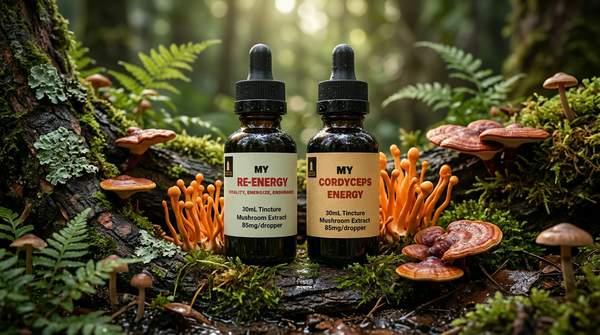
Cordyceps militaris has an altogether different look. Its bright orange or orange-red reproductive structures can emerge like small upright clubs from the substrate. They are worlds away from the familiar cap-and-stem mushroom, and their color makes them especially striking in photographs.
The unusual biology captures attention, but not every commercially named Cordyceps preparation comes from the same fungus. Scientific species names help explain why research involving one type should not automatically be read as a description of all the others.
Cultivation Is Its Own Adventure
The growing interest in Cordyceps has encouraged researchers to study how particular species can be cultivated. C. militaris has received substantial attention because it can be produced under controlled conditions, providing material for research and commercial development.
A 2025 review indexed in PubMed examines the influence of culture conditions on compounds produced by C. militaris. Temperature, light, available oxygen, and the nutrients in a growing substrate can affect development and the composition of the fungal material. The review also looks at solid-substrate and liquid-culture methods, two markedly different approaches to producing fungal growth.
That gives us another intriguing picture of Cordyceps beyond its insect-associated origins. In one setting, researchers study a fungus with a specialized natural host. In another, they investigate how carefully selected growing conditions shape its development in a controlled environment.
One compound of interest is cordycepin, which researchers study alongside polysaccharides and other naturally occurring substances. Its concentration in research materials can vary with species and cultivation conditions. That scientific detail is fascinating, although the 85 mg of mushroom extract declared per dropper on My Mushroom’s Cordyceps bottle is a different measurement and should not be confused with 85 mg of cordycepin.
Cultivation research has become part of the appeal of this unusual group of fungi. A subject that begins with a striking natural-history image ends up involving microbiology, growing substrates, and the fine details of fungal development.
The Energy Name Has a History
Traditional interest in Cordyceps includes associations with vitality and stamina, which help explain why energy-themed product names are common today. Modern researchers have studied certain Cordyceps preparations in exercise-related settings, although the studies differ in their ingredients, methods, and outcomes.
Cordyceps Energy Tincture at My Mushroom takes that well-known association into a 30 mL dropper bottle priced at CA$38.00, with 85 mg of mushroom extract declared per dropper. Its description speaks to active lifestyles and daily performance. The name reflects the species’ traditional energy associations; the bottle’s own authorized claims would determine any promised performance effect.
That compact liquid format has a different appeal from dried fungal material, loose powder, or a prepared beverage. The 30 mL bottle and extract statement are immediately recognizable, even to someone who has never memorized a scientific name or followed the intricacies of cultivation research.
It is the highest-priced of the five species-named tinctures in the supplied functional catalogue. The name, price, and bottle details make it an identifiable choice for someone whose curiosity began with Cordyceps itself, without asking the product to perform the extraordinary feats associated with some of its natural relatives.
Two Energy-Named Bottles, Two Ways to Browse
Cordyceps Energy Tincture has company in the functional collection: MY RE-ENERGY Mushroom Tincture. Both are presented in 30 mL dropper bottles with 85 mg of mushroom extract declared per dropper, but their names invite different routes into the assortment. One begins with the Cordyceps fungus; the other begins with a broader interest in daytime routines.
The Cordyceps tincture is priced at CA$38.00 and MY RE-ENERGY at CA$29.99, a difference of CA$8.01 in the supplied catalogue. That is a real choice to compare, although matching extract quantities do not establish matching ingredients or identical effects. The descriptions do not identify the species used in MY RE-ENERGY, or the precise Cordyceps species used in the other bottle.
If the extraordinary insect-fungus life cycle first got your attention, the species-named Cordyceps bottle is the natural one to open. Someone drawn to the store’s broader daily-routine collection may begin with MY RE-ENERGY instead. With prices, bottle sizes, and extract declarations in front of you, there is enough substance for a genuine comparison without making up a winner.
You can search for a mushroom by name, open a “Meet your mushroom” entry, and follow the ordinary shopping-bag process through checkout. It is an approachable way to encounter a subject with a decidedly unordinary origin story.
Come for the Strange Story
An insect-associated fungus, an orange club-shaped fruiting body, and a cultivation laboratory make an unlikely trio. Cordyceps manages to connect them all, and the science keeps developing beyond its famous natural-history reputation.
Follow the curiosity to My Mushroom’s Cordyceps Energy Tincture, then compare its bottle with MY RE-ENERGY if the names catch your eye. An insect-associated fungus and two very different shopping interests are quite a lot to discover in one friendly little collection.